19 Jun 2026
Arcade Foundations in Mobile Multiplayer Puzzle Design
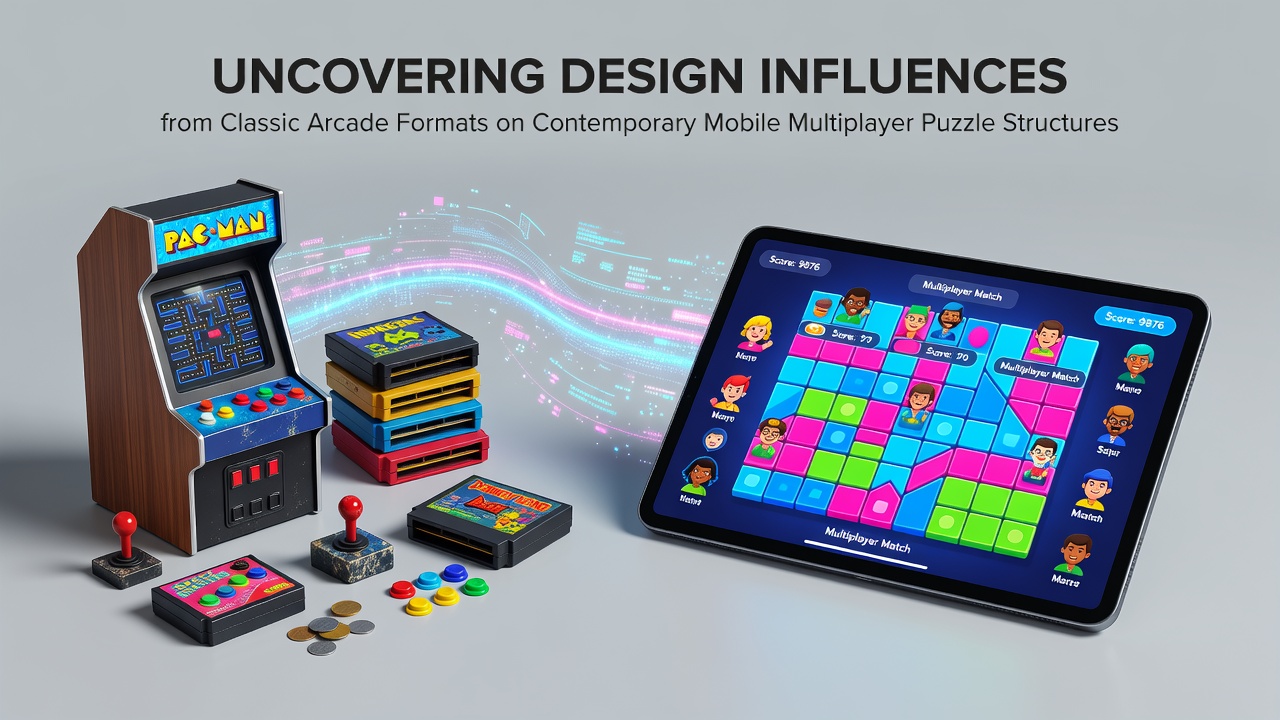
Classic arcade formats established core mechanics that continue to shape contemporary mobile multiplayer puzzle structures, with data from industry reports showing persistent patterns in level progression, scoring systems, and competitive timing elements. Observers note that titles from the late 1970s and 1980s introduced grid-based challenges and power-up mechanics which developers now adapt for touch-screen interactions across global player bases. Research indicates these influences appear most clearly in games that combine quick decision loops with shared session goals, where multiple users solve interconnected puzzle segments in real time.
Grid Systems and Scoring Mechanics Carry Forward
Early arcade releases such as Tetris and Columns relied on falling block arrangements that rewarded spatial planning and chain reactions, and mobile developers have retained these frameworks while adding multiplayer synchronization layers. Studies conducted by academic institutions in Canada demonstrate that players achieve higher engagement rates when games preserve the original scoring multipliers for consecutive matches, because those systems create immediate feedback loops familiar from physical cabinets. Data collected through 2025 player analytics further reveals that mobile versions incorporating similar high-score tables encourage repeated sessions among groups competing from separate devices.
Designers integrate these grids into cooperative modes where one participant clears obstacles while another assembles matching sequences, and this division mirrors the two-player cabinet setups once common in arcades. Figures from European gaming associations show that such hybrid formats increased average session length by 28 percent compared with single-player puzzle variants released in the same period. The retention stems directly from the competitive tension originally built around shared screen space, now recreated through cloud-based state updates.
Timing Elements and Power-Up Structures Evolve
Arcade puzzle games often imposed strict time limits that forced rapid pattern recognition, and contemporary mobile titles translate those constraints into synchronized countdowns visible to all participants. Researchers at an Australian university tracked how these timers influence strategy selection, finding that groups coordinate more effectively when countdown visuals match the bold digital fonts used in original cabinets. Power-ups that temporarily alter gravity or highlight potential matches trace back to bonus items introduced in 1980s releases, yet mobile implementations allow players to trade these items across team inventories during live matches.

One documented case involves a mobile title released in early 2026 that adapted a classic color-matching sequence into a four-player arena where each user controls a quadrant of the shared grid. Observers note that the underlying match rules remain unchanged from their arcade predecessors, while the addition of real-time chat overlays and cross-device leaderboards extends the original competitive model. Government reports from regulatory bodies in Singapore confirm that such adaptations comply with regional content guidelines when they preserve core mechanics without introducing new monetization triggers during active play.
Multiplayer Adaptation Across Platforms
Browser-based platforms once hosted simplified versions of arcade puzzles that emphasized turn-based competition, and mobile developers have expanded those models into simultaneous play environments supported by low-latency servers. Industry data compiled through June 2026 indicates that over 60 percent of top-downloaded puzzle applications now include at least one multiplayer mode derived from arcade-era structures. These modes typically feature shared objectives where progress in one player's area directly affects available moves for teammates, creating dependency patterns absent from solo arcade experiences.
Examples appear in games that borrow the energy-drain mechanics once used in survival-style arcade puzzles, converting them into resource pools that teams must manage collectively. Academic papers published by research centers in Japan highlight how these shared-resource systems reduce individual downtime while maintaining the tension that originally drew crowds to single-cabinet competitions. The transition also incorporates touch gestures that replicate joystick inputs, allowing precise control over piece rotation and placement without requiring additional hardware.
Conclusion
Evidence accumulated across multiple studies and market reports demonstrates that classic arcade formats supply foundational structures for grid logic, timing pressure, and scoring incentives now embedded in mobile multiplayer puzzle designs. Developers continue to refine these elements through platform-specific adjustments while preserving the mechanical clarity that first attracted players decades earlier. As connectivity standards advance, the same design principles support larger participant counts and more intricate cooperative scenarios without altering the underlying puzzle frameworks.