17 Jul 2026
Blending Adventure Narratives with Strategy Puzzles in Free Cross-Platform Games
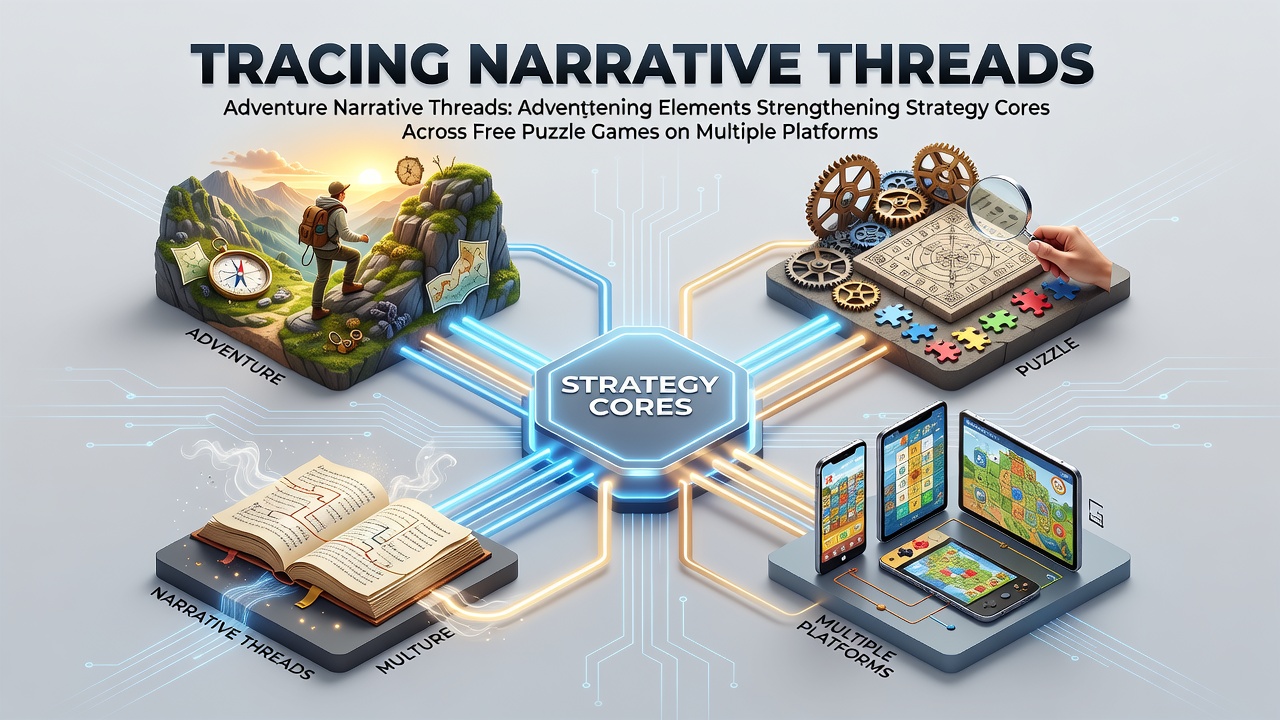
Free puzzle games have incorporated adventure narrative components to reinforce their strategic cores across browser and mobile platforms in recent years, with developers drawing on story progression, exploration sequences, and character development to add depth to core matching, resource management, and pathfinding systems. Data from industry reports in July 2026 indicate that such hybrids account for a growing share of daily active users in the free-to-play segment, where players engage longer sessions when narrative threads connect individual puzzle stages into broader campaigns.
Platform Expansion and Design Convergence
Browser-based titles and mobile applications have converged in their use of adventure framing to support strategy layers, allowing seamless transitions between devices without losing continuity in player progress. Observers note that developers synchronize save data through cloud services, so a player who advances a story arc on a desktop browser can resume the same strategic decisions on a smartphone during commutes. Research conducted by the Entertainment Software Association shows that cross-platform titles featuring unified narratives experienced 28 percent higher retention rates compared with pure puzzle formats in the first half of 2026.
Mechanics such as branching dialogue choices and map-based exploration now serve as containers for traditional puzzle loops, turning each solved grid or inventory challenge into a step that advances an overarching quest. Those who track player behavior report that users revisit earlier stages more frequently when story consequences depend on strategic resource allocation made during puzzle sequences.
Narrative Devices That Support Strategic Depth
Adventure elements function as scaffolding rather than decoration. Environmental storytelling reveals hidden objectives that require players to plan multiple moves ahead, while character backstories introduce constraints that alter optimal solutions in each puzzle. One study released by the Canadian Interactive Digital Media Association documented cases where games using quest logs to track strategic variables increased completion rates of advanced levels by guiding attention to overlooked patterns without explicit tutorials.
Multiple-choice encounters embedded between puzzle sections force players to weigh short-term gains against long-term story outcomes, effectively extending the decision space beyond the immediate grid. Figures released in mid-2026 by the Interactive Games and Mobile Association of Australia reveal that titles employing this structure saw average session lengths rise from twelve to nineteen minutes among users aged eighteen to thirty-four.
Case Patterns Across Popular Titles
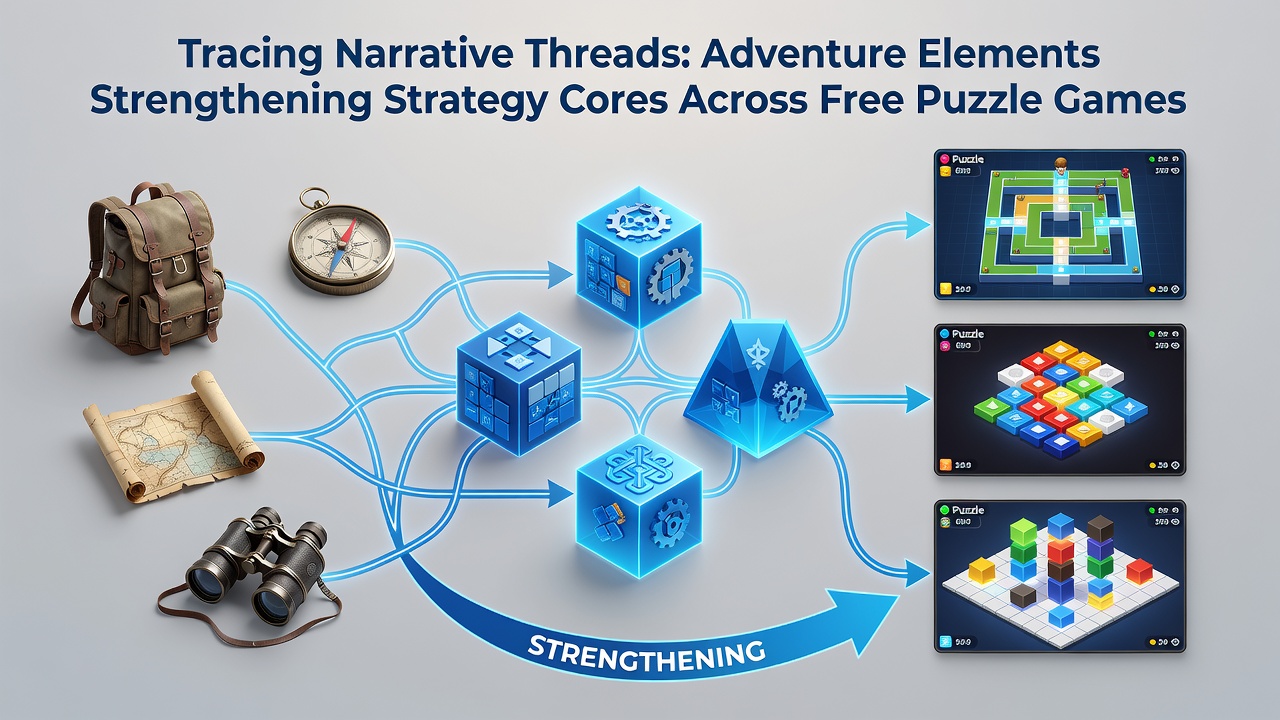
Several free releases illustrate the pattern. In one browser and mobile hybrid, players collect artifacts during puzzle runs that later unlock alternate routes in an adventure overworld, requiring them to balance immediate scoring efficiency against future strategic flexibility. Another series uses companion characters whose abilities change based on earlier puzzle performance, turning each match-three sequence into preparation for upcoming encounters. Data compiled by academic researchers at the University of Waterloo indicate that these feedback loops encourage experimentation across multiple playthroughs while maintaining accessibility for first-time users.
Seasonal events scheduled around July 2026 further demonstrate the approach, introducing limited-time story chapters that layer new strategic variables onto existing puzzle cores. Players who complete narrative milestones receive temporary modifiers that alter resource generation rates, prompting fresh optimization strategies without requiring new mechanics.
Technical and Distribution Considerations
Cross-platform deployment relies on unified engines that handle both touch input and mouse controls while preserving narrative pacing. Developers maintain consistent frame timing and asset loading so story beats land at the same emotional cadence regardless of device. Reports from the European Games Developer Federation note that studios adopting shared codebases for narrative and strategy systems reduced update cycles by an average of three weeks during 2025 and 2026.
Monetization models integrate with these threads by offering optional cosmetic upgrades tied to story characters rather than direct power advantages, preserving strategic balance across paying and non-paying users. Observers tracking storefront data observe that such approaches correlate with higher review scores when players perceive narrative fairness alongside mechanical challenge.
Conclusion
Adventure components continue to strengthen strategy foundations in free puzzle games by providing context, motivation, and variable constraints that evolve across platforms. The pattern documented through July 2026 shows sustained player engagement when story progression and strategic decisions remain interdependent rather than sequential. As development tools standardize and audience data refine, the integration of narrative threads with core puzzle mechanics appears likely to expand into additional genres while remaining anchored in accessible free formats.