22 Jun 2026
Classic Arcade Mechanics Finding New Life in Multiplayer Browser Puzzles
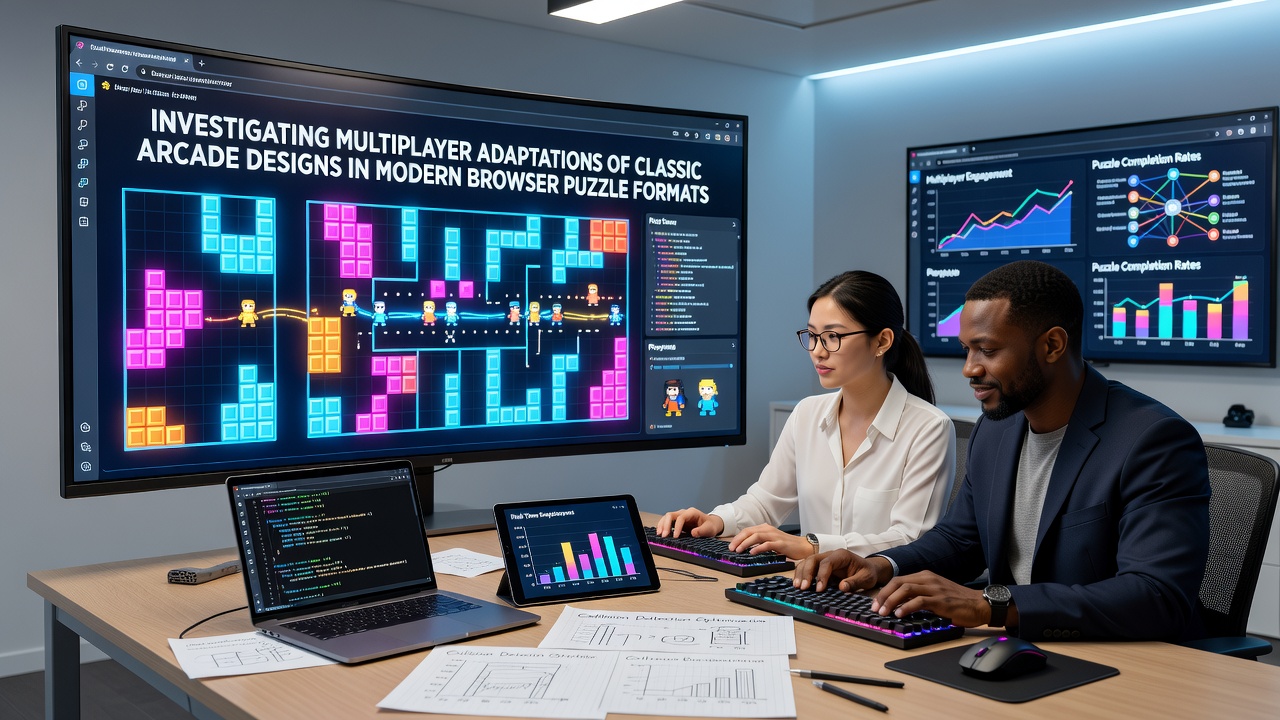
Classic arcade titles from earlier decades relied on simple controls and competitive scoring systems, yet developers now translate those foundations into browser environments where multiple users interact simultaneously through shared puzzle boards. Observers note that games drawing from titles like Tetris or Pac-Man incorporate real-time elements where participants compete or cooperate within the same session, and this shift relies on HTML5 technologies that support seamless cross-device play without downloads.
Designers adapt core loops such as block stacking or maze navigation by layering in player-versus-player mechanics, and data from industry reports shows increased engagement when sessions allow direct interference between users rather than isolated high-score chasing. In June 2026, figures released by the Entertainment Software Association indicated that browser-based puzzle formats accounted for a growing share of multiplayer sessions across desktop and mobile interfaces alike.
Core Design Elements Carried Over from Arcades
Arcade originals emphasized immediate accessibility paired with escalating difficulty, and modern adaptations preserve those traits while introducing shared state management across connected clients. Researchers have documented how collision detection systems from early coin-operated machines evolve into synchronized event handling that prevents desync issues during group play, and this technical continuity allows familiar movement patterns to feel consistent even when multiple cursors occupy the same grid.
Scoring algorithms that once rewarded individual survival now distribute points based on collaborative clears or disruptive actions against opponents, and case studies reveal that titles built around these hybrid systems maintain session lengths comparable to their single-player predecessors. Those who've studied retention metrics find that the addition of live opponents heightens tension without altering the underlying puzzle logic that made the originals compelling.
Technical Pathways Enabling Browser Multiplayer
WebSocket connections and canvas rendering handle the low-latency requirements for simultaneous inputs, and developers frequently combine these with peer-to-peer fallbacks to reduce server load during peak hours. Studies conducted by academic teams at institutions across North America and Europe highlight how WebGL acceleration supports the visual density needed for multiple animated elements on screen without compromising frame rates on standard hardware.
Browser security models further constrain certain data exchanges, yet teams navigate these limits through encrypted channels and validated move packets that keep gameplay fair. What's interesting is the way server-authoritative checks integrate with client-side prediction, allowing smooth movement feedback while preventing cheating in competitive puzzle matches.

Gameplay Patterns Emerging in Current Releases
Many current implementations feature modes where one player places blocks to obstruct another's path or clears lines to trigger chain reactions for teammates, and this mirrors the competitive spirit of arcade cabinets while fitting within browser constraints. Reports from the Interactive Games and Entertainment Association in Australia note rising participation numbers in such formats during 2026, particularly among users accessing sessions through standard web browsers on laptops and tablets.
Designers also experiment with asymmetric roles, where one participant controls a pursuer while others solve spatial challenges, and these variations draw directly from chase mechanics found in classic coin-op releases. Observers note that tutorial systems have grown more sophisticated to onboard newcomers quickly, since the addition of opponents demands faster grasp of both individual and group objectives.
Challenges in Scaling Classic Logic to Group Play
Balancing fairness across different connection qualities remains an ongoing focus, and developers implement lag compensation techniques that adjust piece movement timing based on detected latency. Research papers from Canadian universities have examined how these adjustments affect perceived skill expression, revealing that well-tuned systems maintain the precision feel of original arcade controls even under variable network conditions.
Content updates must also account for browser compatibility across operating systems, and teams address this through progressive enhancement that preserves core puzzle functionality on older platforms. The reality is that maintaining consistent rule application across diverse devices requires extensive testing cycles that extend development timelines compared to native app equivalents.
Conclusion
Adaptations of classic arcade designs continue to expand within modern browser puzzle formats through careful preservation of core mechanics alongside new multiplayer layers, and available data points to sustained interest in these hybrids. Technical advancements in web standards support the necessary infrastructure, while regional industry organizations track participation trends that reflect broader adoption patterns. Those examining the space find ongoing innovation centered on balancing competitive and cooperative elements without straying from the immediate accessibility that defined the originals.