Demographic Patterns Reveal How Seasonal Updates Reshape Engagement in Cross-Platform Action-Puzzle Hybrids
Written by Cameron Richter · Aug 5, 2026
Demographic Patterns Reveal How Seasonal Updates Reshape Engagement in Cross-Platform Action-Puzzle Hybrids
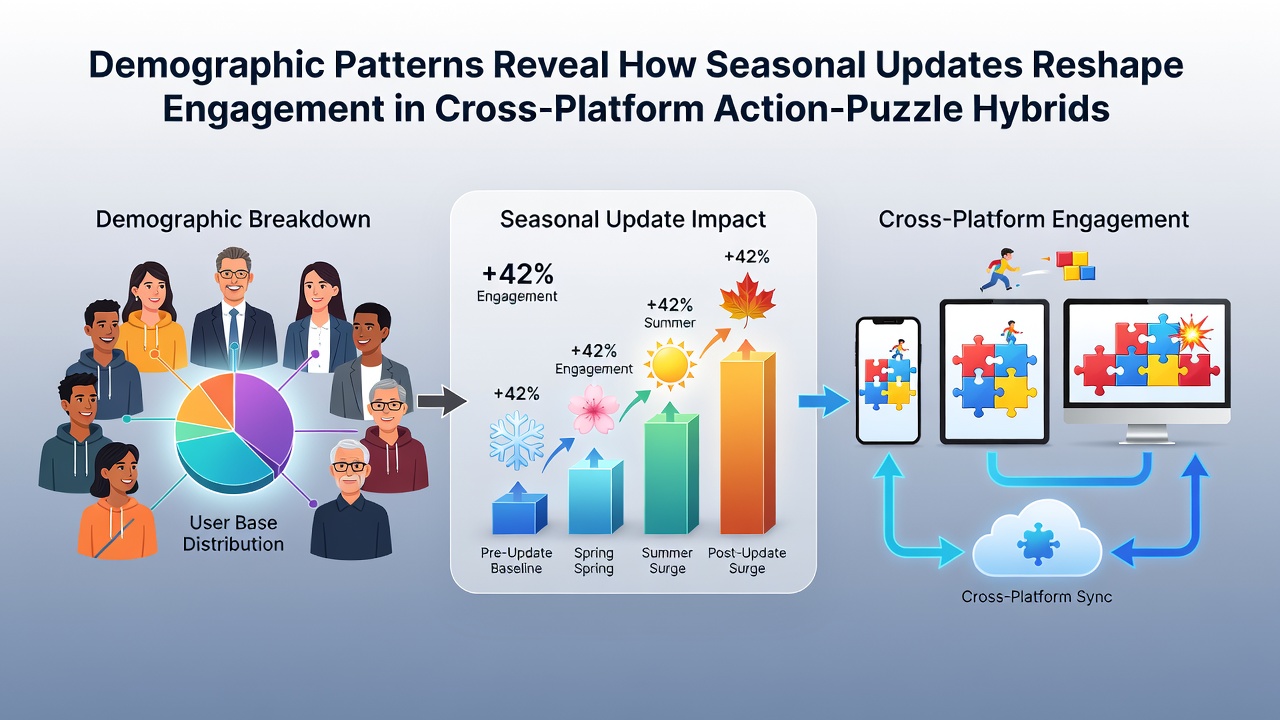
Seasonal updates in action-puzzle hybrids continue to drive measurable changes in player behavior across mobile and browser platforms, with data from mid-2026 indicating distinct patterns tied to age, region, and device preference. Researchers tracking these titles note that summer events in August 2026, including limited-time modes and cross-progression rewards, correlate with increased session lengths among users aged 18 to 34 while showing steadier but lower retention rates for those over 45. These shifts appear in aggregated telemetry from multiple studios, where daily active users rise during themed content drops and then stabilize once the seasonal period ends.
Age-Based Engagement Variations
Surveys conducted by industry groups reveal that younger demographics respond more strongly to fast-paced seasonal mechanics such as time-limited leaderboards and collaborative puzzle events, which blend arcade-style action with strategic layer building. In contrast, older player cohorts maintain consistent play patterns regardless of update cadence, often favoring single-player modes that emphasize puzzle depth over competitive elements. Data from the Entertainment Software Association indicates that hybrid titles saw a 22 percent uptick in cross-platform logins during July and August 2026 among North American users in the 18-24 bracket, whereas European cohorts in similar age ranges showed gains concentrated in evening hours due to differing work schedules.
Platform-Specific Response to Updates
Mobile platforms capture the bulk of short-session engagement spikes during seasonal windows, while browser versions sustain longer, more deliberate play sessions that align with puzzle-solving loops. Observers at research institutions note that browser users frequently switch to mobile for daily login bonuses tied to seasonal narratives, creating a seamless loop that boosts overall retention metrics. Figures from a 2026 report by the Interactive Games and Mobile Association in Australia highlight how these crossovers increased average playtime by 15 percent on portable devices compared with desktop access alone, particularly when updates introduced shared progression systems.
Regional Demographic Trends in 2026
August 2026 updates featuring back-to-school themes and harvest motifs produced varied outcomes by geography, with North American markets demonstrating stronger uptake among urban players who value quick mobile sessions during commutes. Canadian data from Statistics Canada gaming modules points to elevated engagement in puzzle hybrids among suburban households, where family accounts often share progress across devices. In European regions, updates emphasizing cooperative elements drew higher participation from 25-40 age groups, according to aggregated findings from the European Games Developer Federation. These patterns underscore how seasonal content adapts to local calendars, such as aligning with academic terms or national holidays, to sustain interest without requiring major core gameplay changes.
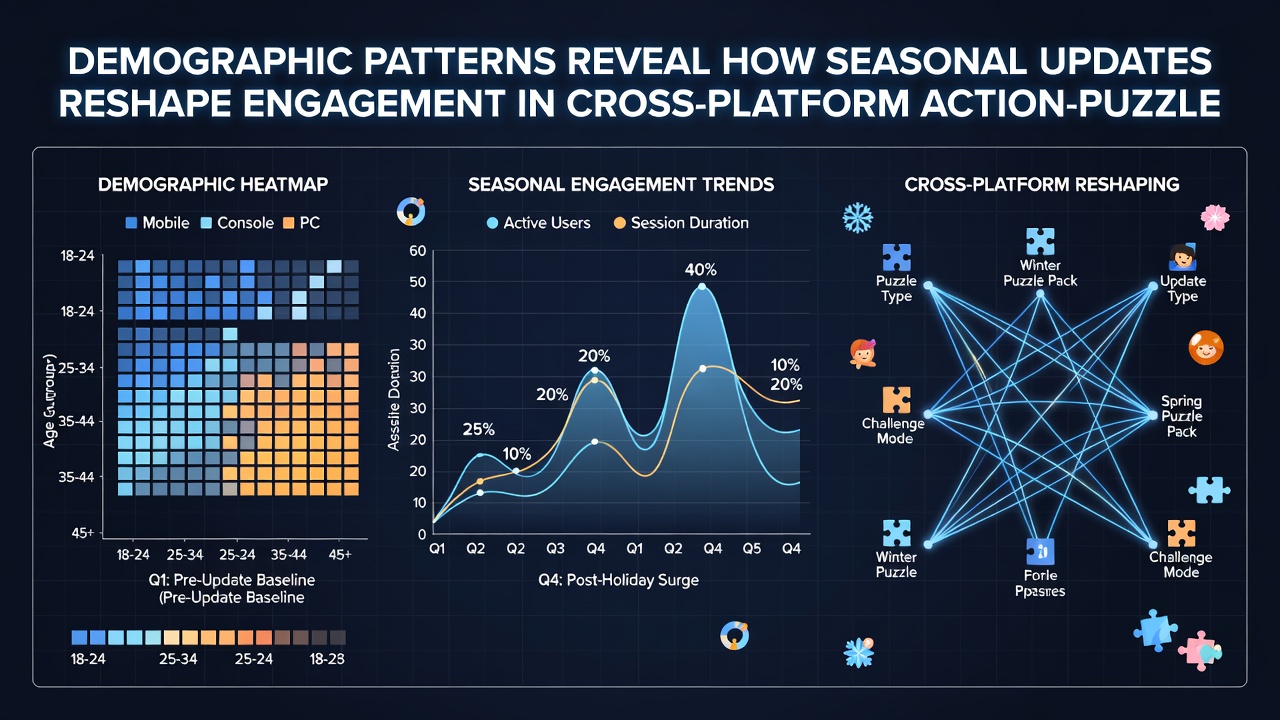
What's notable is the way these updates integrate action sequences with puzzle constraints, allowing developers to test demographic responses through A/B variations in reward structures. One analysis from university-led studies in Canada found that titles incorporating seasonal battle arenas retained 18 percent more mixed-age groups when mobile and browser saves synced automatically. Such mechanics reduce friction for players moving between formats, yet they also expose gaps in older demographics who prefer isolated puzzle sessions over competitive action layers.
Data Patterns from Seasonal Cycles
Telemetry collected across multiple hybrid releases shows recurring spikes in engagement during August windows, followed by gradual declines unless follow-up content extends the seasonal arc. Researchers tracking these cycles emphasize that demographic variables like household income and device ownership influence how players interact with update-driven features, such as cosmetic unlocks or limited-event currencies. Industry reports compiled by the Japan External Trade Organization on Asian markets reveal parallel trends, where mobile-dominant users in the 13-24 range drive the majority of seasonal revenue through in-app purchases tied to action-puzzle events. Browser users in the same regions exhibit steadier free-to-play participation, often extending sessions to complete complex puzzle chains without the time pressure of live events.
Yet the data also indicates that cross-platform hybrids benefit when seasonal updates include accessibility adjustments, such as adjustable difficulty in action segments, which broaden appeal across age brackets. Studies from academic sources in Australia confirm that these tweaks correlate with higher completion rates for puzzle objectives among casual players who might otherwise disengage during competitive phases.
Conclusion
Overall, the demographic patterns emerging from 2026 seasonal updates demonstrate clear connections between content timing, platform choice, and player retention in action-puzzle hybrids. Continued monitoring by regulatory bodies and research organizations across regions will likely refine these insights as new cycles unfold, providing clearer benchmarks for how such titles evolve engagement across diverse user bases.