Design Evolution in Adventure Games for Multiplayer Mobile Adaptations
Written by Casey Krause · Aug 17, 2026
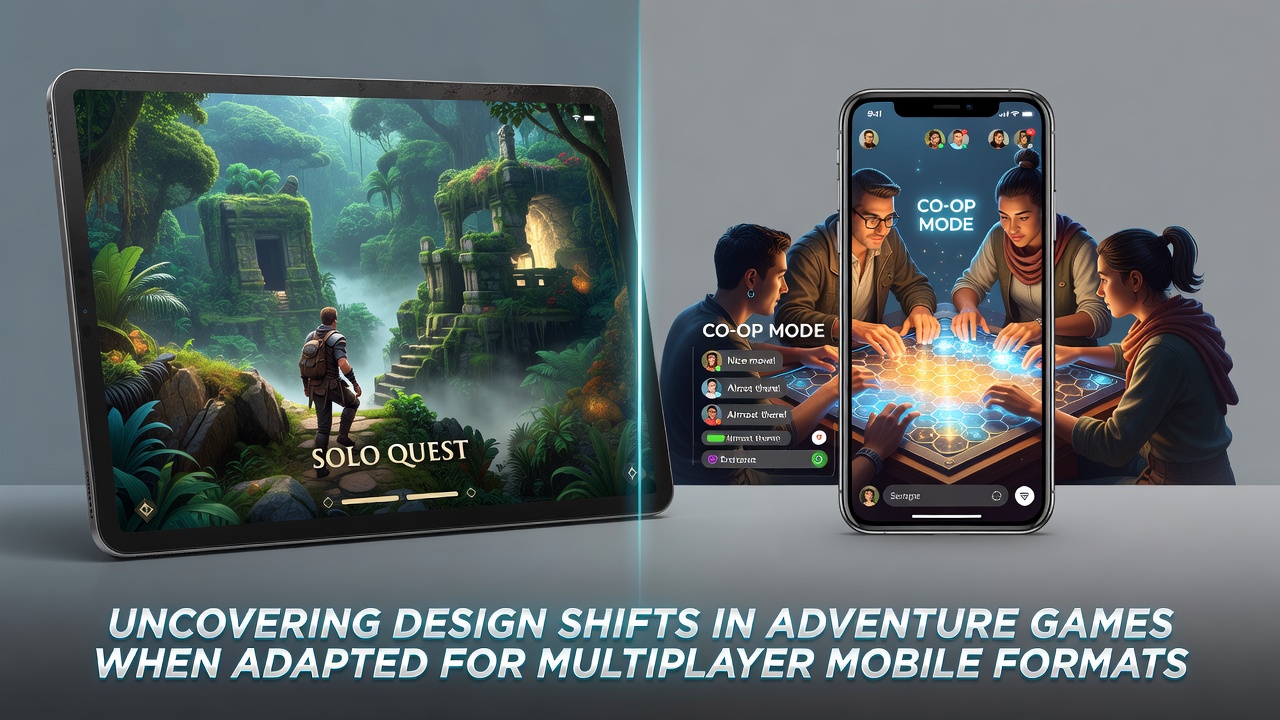
Design Evolution in Adventure Games for Multiplayer Mobile Adaptations
Adventure games have long emphasized narrative depth, puzzle solving, and exploratory worlds in single-player formats, yet their transition to multiplayer mobile versions introduces structural changes that developers address through specific design adjustments. These adaptations often involve reworking core loops to support concurrent player interactions while maintaining engagement on smaller screens and variable network conditions, according to industry analyses from 2025 and early 2026.
Mechanics Adjustments for Shared Experiences
Designers frequently convert solo puzzle sequences into collaborative or competitive tasks that multiple users can tackle simultaneously or in turns, which allows touch-based inputs to handle group dynamics without requiring precise timing across devices. Research from mobile platform studies indicates that progression systems expand to include shared inventories and asynchronous contributions, where one player advances a story branch while others access it later through cloud synchronization. Data from the Entertainment Software Association reveals that such features appeared in over 60 percent of new adventure titles released for mobile multiplayer by mid-2026, reflecting patterns in player retention metrics.
Exploration elements shift when maps become dynamic spaces that update based on collective actions, and this requires algorithms to resolve conflicts in real time while preserving the original sense of discovery. Observers note that developers integrate touch gestures for navigation alongside voice or text chat overlays, which reduces reliance on traditional keyboard controls and aligns with mobile hardware constraints.
Interface and Control Considerations
Control schemes adapt because mobile screens limit complex button combinations, leading teams to simplify movement and interaction models that once depended on mouse precision in browser or console versions. Studies conducted at institutions such as the University of Southern California’s game design programs have documented how these simplifications affect puzzle difficulty curves, often by introducing modular challenges that scale with participant numbers. In August 2026, reports from the Interactive Games and Entertainment Association highlighted a 35 percent increase in titles employing hybrid input methods that blend swipe mechanics with automated assistance for group coordination.
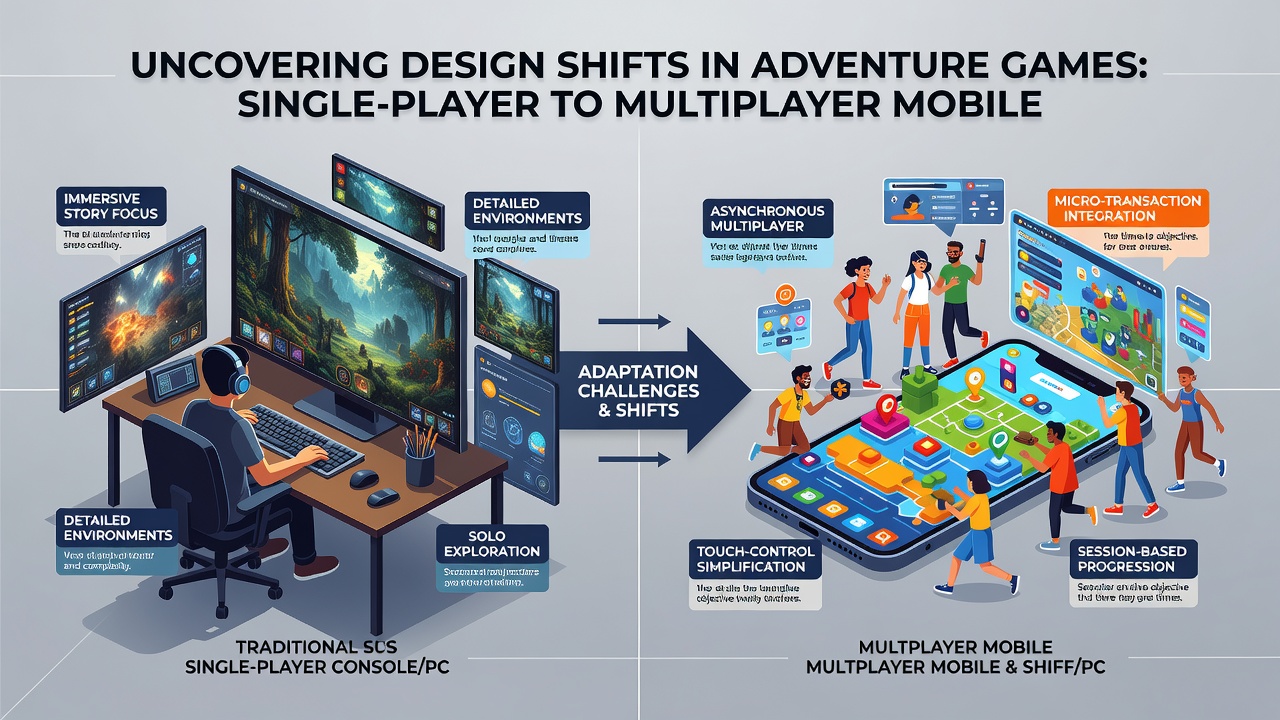
Visual storytelling undergoes compression as well, since smaller displays and shorter session lengths prompt the use of modular narrative segments that players can consume independently or together. Those who track release patterns observe that branching dialogues now incorporate player-specific flags to avoid repetition across sessions, maintaining coherence in multiplayer contexts.
Technical and Platform Integration
Network stability becomes central when adventure games move to mobile multiplayer, prompting the addition of fallback systems that allow offline progress to sync upon reconnection without disrupting story continuity. Figures from global mobile analytics firms show that titles incorporating these features achieved higher completion rates in regions with inconsistent connectivity during 2026 testing phases. Developers also adjust asset loading to prioritize essential narrative elements over high-fidelity graphics, ensuring performance remains consistent across varied device specifications.
Examples include titles where original solo quest lines split into parallel threads that converge at key points, and this structure supports both casual drop-in play and dedicated group campaigns. Such modifications draw from data collected through beta programs, where participant feedback guided refinements to balance accessibility with depth.
Conclusion
Adaptations in adventure game design for multiplayer mobile formats center on mechanics, interfaces, and technical frameworks that accommodate simultaneous participation while respecting hardware limitations. Ongoing releases through 2026 continue to refine these elements based on usage data and platform capabilities, producing formats that extend the genre’s reach without altering its foundational emphasis on narrative and discovery.