3 Jun 2026
Layered Encounters: Mapping Player Interactions in Adventure-Strategy Hybrids on Portable Devices
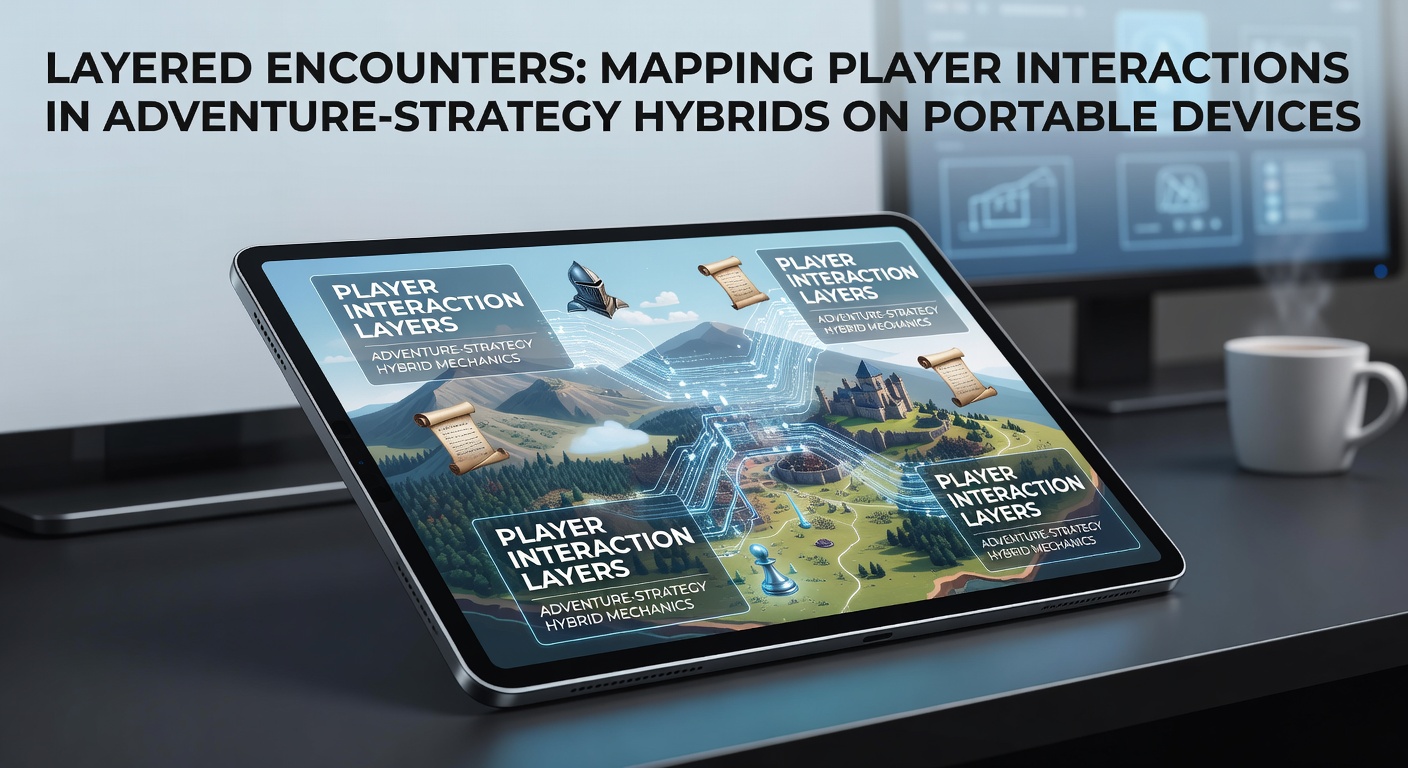
Portable devices have become central platforms for adventure-strategy hybrids, where narrative exploration combines with resource management and tactical planning, while developers track the resulting player interactions through structured mapping techniques that reveal how choices unfold across sessions. Researchers at academic institutions have examined these patterns by logging touch inputs, decision trees, and progression paths that emerge when users engage with titles blending story elements and strategic systems on smartphones and tablets.
Core Components of Interaction Mapping
Interaction mapping in these games relies on data collection methods that capture sequences of player actions, and studies show how touch gestures, menu selections, and environmental interactions form distinct layers that influence overall engagement. Academic analyses indicate that primary layers often include movement mechanics tied to exploration, whereas secondary layers involve inventory management and alliance building, which connect through conditional triggers that activate based on prior choices. Data from portable device analytics platforms reveals that players frequently alternate between these layers within single play sessions lasting under thirty minutes, creating measurable clusters of activity that repeat across different titles.
Developers apply graph-based models to represent these layers, connecting nodes for individual actions with edges that denote cause-and-effect relationships, and this approach allows teams to identify bottlenecks where users abandon strategic branches. In June 2026, reports from the Interactive Software Federation of Europe highlighted how mapping tools adapted for mobile hardware have improved accuracy in tracking multi-touch inputs during hybrid gameplay scenarios.
Device-Specific Factors Influencing Encounters
Screen size and processing power on portable devices shape how interactions register, since smaller interfaces require precise tapping that can alter pacing compared to larger tablet displays. Observers note that battery constraints often lead players to favor shorter strategic loops over extended adventure segments, and telemetry from major app stores confirms higher completion rates for hybrid games when sessions stay within fifteen-minute windows. Research from the University of Melbourne's digital games laboratory has documented how these hardware limitations prompt designers to layer quick tactical decisions atop slower narrative reveals, maintaining momentum without draining resources.

Case Patterns in Hybrid Titles
Popular examples demonstrate consistent interaction structures, such as resource allocation systems that branch into story outcomes when players complete exploration objectives, and data logs from these titles show recurring sequences where tactical pauses follow discovery events. One widely studied pattern involves alliance formation mechanics that require players to revisit earlier map areas, creating looped interactions that increase retention metrics according to industry tracking services. Figures from the Entertainment Software Association indicate that adventure-strategy hybrids on portable platforms accounted for measurable growth in active user bases through 2025, with mapping analyses helping studios refine encounter density to match device usage habits.
Additional layers surface when social features integrate into single-player frameworks, allowing indirect player influence through shared maps or asynchronous challenges, and these elements add vertical complexity that mapping tools must account for by separating solo decision data from community-driven variables. Those analyzing portable play sessions report that users often experiment with multiple interaction paths before settling on preferred strategies, generating rich datasets that inform iterative design updates.
Analytical Techniques and Data Trends
Heatmap visualizations combined with decision-tree algorithms provide clear representations of frequent interaction clusters, enabling precise identification of high-engagement zones within hybrid game environments. Studies conducted across European and North American markets show that portable device users exhibit stronger preferences for layered encounters when feedback loops between adventure and strategy elements remain tight, reducing cognitive load during transit-based play. External reports link these trends to hardware improvements in touch sensitivity and display refresh rates that support smoother transitions between interaction types.
Mapping also extends to temporal dimensions, recording how time spent in each layer correlates with completion rates, and longitudinal data collected through 2026 demonstrates steady refinement in these metrics as developers incorporate player behavior models into early prototyping stages. Government-supported digital media initiatives in Canada have funded related research projects that apply similar mapping methods to evaluate accessibility across diverse player demographics.
Conclusion
Layered encounters in adventure-strategy hybrids on portable devices continue to evolve through systematic mapping of player interactions, supported by ongoing data collection from academic and industry sources that track device-specific behaviors and decision patterns. These approaches yield actionable insights into how narrative and tactical components intersect during typical sessions, guiding future refinements in game architecture without altering core hardware constraints.