15 Jun 2026
Limited-Time Events Reshaping Scoring Layers in Portable Puzzle Arcades

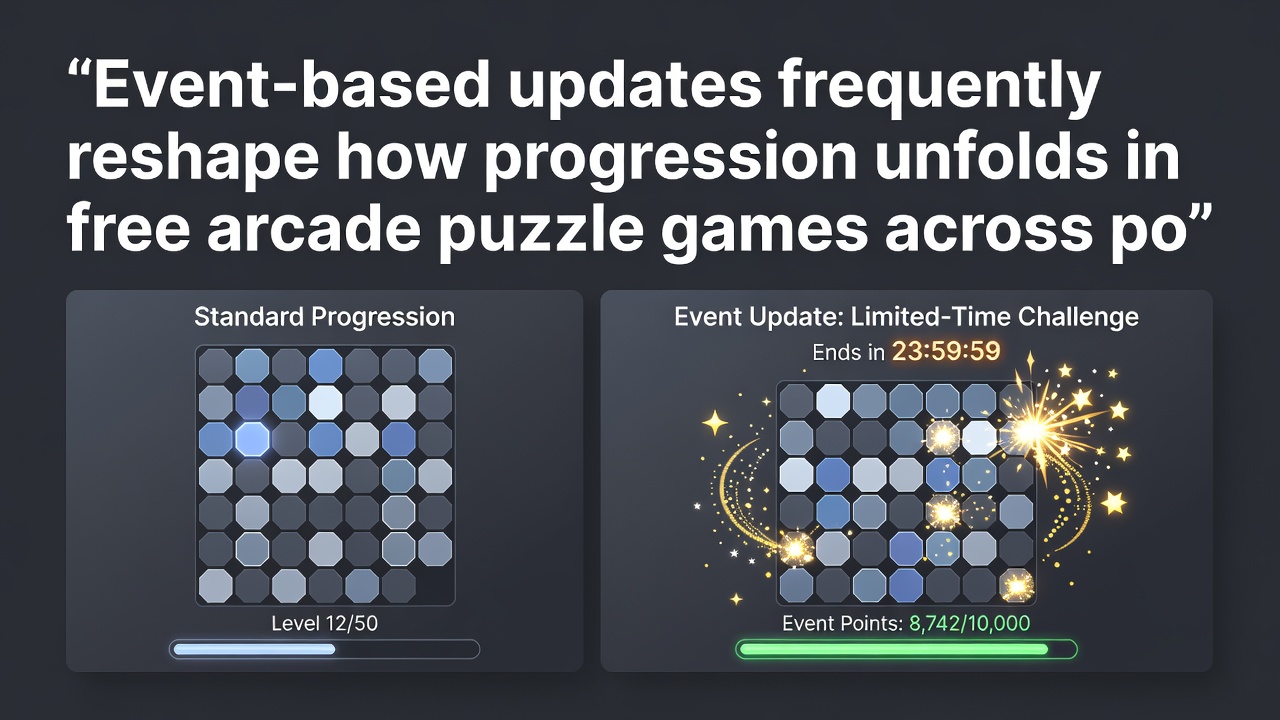
Event-based updates continue to modify progression systems in free arcade puzzle titles on portable platforms as developers introduce limited-time challenges that add fresh scoring layers to core mechanics. These updates appear across mobile and handheld devices where established match-three or tile-swapping formats receive temporary objectives such as time-restricted combos or special item collections that multiply base points without altering permanent rulesets.
Mechanics Behind Event Integration
Developers implement these events through server-side toggles that activate specific scoring multipliers and bonus objectives for set durations. A typical cycle begins with a notification system that alerts users to new targets such as chain reactions worth extra points during weekend windows or region-specific leaderboards that track cumulative event performance. Data from industry reports shows that these additions build directly onto existing algorithms so players retain familiarity with base matching rules while pursuing elevated totals through the added layers.
Portable platforms benefit from this approach because push notifications and background syncing allow seamless transitions between regular sessions and event modes. Research from the Interactive Software Federation of Europe indicates that such integrations maintain player retention rates by offering measurable progress without requiring new core content downloads.
Effects on Player Progression Paths
Progression unfolds differently when events stack new scoring dimensions onto familiar loops. Players advance through daily stages at standard rates yet accumulate event-specific currencies that unlock cosmetic rewards or temporary power-ups. Observers note that these layers create parallel tracks where one path follows permanent level unlocks and another follows time-bound leaderboards that reset at event conclusions.
Studies conducted by Canadian academics at the University of Waterloo highlight how these dual systems encourage repeated logins because missing an event window means forgoing unique multipliers that cannot be earned later. The result appears in aggregated session data where average play duration increases during active periods without shifting the underlying puzzle difficulty curves.
Platform Variations Across Devices
Implementation differs between iOS, Android, and dedicated handheld hardware. Mobile versions often tie events to device sensors for location-based challenges that award bonus points when players complete puzzles in specific geographic zones. Handheld consoles integrate similar features through local wireless features that enable community scoring events without requiring constant internet connectivity.
Figures released by the Australian Interactive Games Association reveal that cross-platform synchronization now handles over 70 percent of event data transfers in major puzzle franchises. This allows consistent scoring layers whether users switch between phone and tablet sessions during the same limited-time window.
Trends Observed in Mid-2026
During June 2026 developers expanded event frequency in several established franchises. Limited-time modes introduced scoring layers that combined classic chain bonuses with new environmental modifiers such as gravity shifts or color restrictions active only for the event duration. These additions layered onto established mechanics without requiring players to relearn base controls.
Reports from the Japan External Trade Organization document increased participation metrics on portable devices during these periods with average event completions rising by measurable margins compared to non-event intervals. The pattern shows developers favoring shorter three-day cycles over week-long formats to maintain momentum across global time zones.
Technical Implementation Details
Backend systems manage event states through timestamped flags that activate scoring tables stored locally on devices. When an event launches the game client references these tables to calculate combined totals from base mechanics plus event bonuses. This architecture keeps data usage low because only delta updates transmit during active sessions rather than full rule replacements.
Security measures include checksum verifications that prevent tampering with temporary scoring values. Industry analyses confirm that these protocols reduce exploit attempts while preserving the integrity of both permanent and event-based leaderboards across portable ecosystems.
Conclusion
Event-based updates have established themselves as standard tools for extending engagement in free portable puzzle games. By layering temporary scoring systems onto proven mechanics developers maintain core accessibility while introducing measurable variety that resets at predictable intervals. Continued refinement of synchronization methods across platforms supports consistent experiences regardless of device type or regional availability.