8 Jul 2026
Multiplayer Dynamics Expanding Across Free Mobile Arcade Strategy Titles
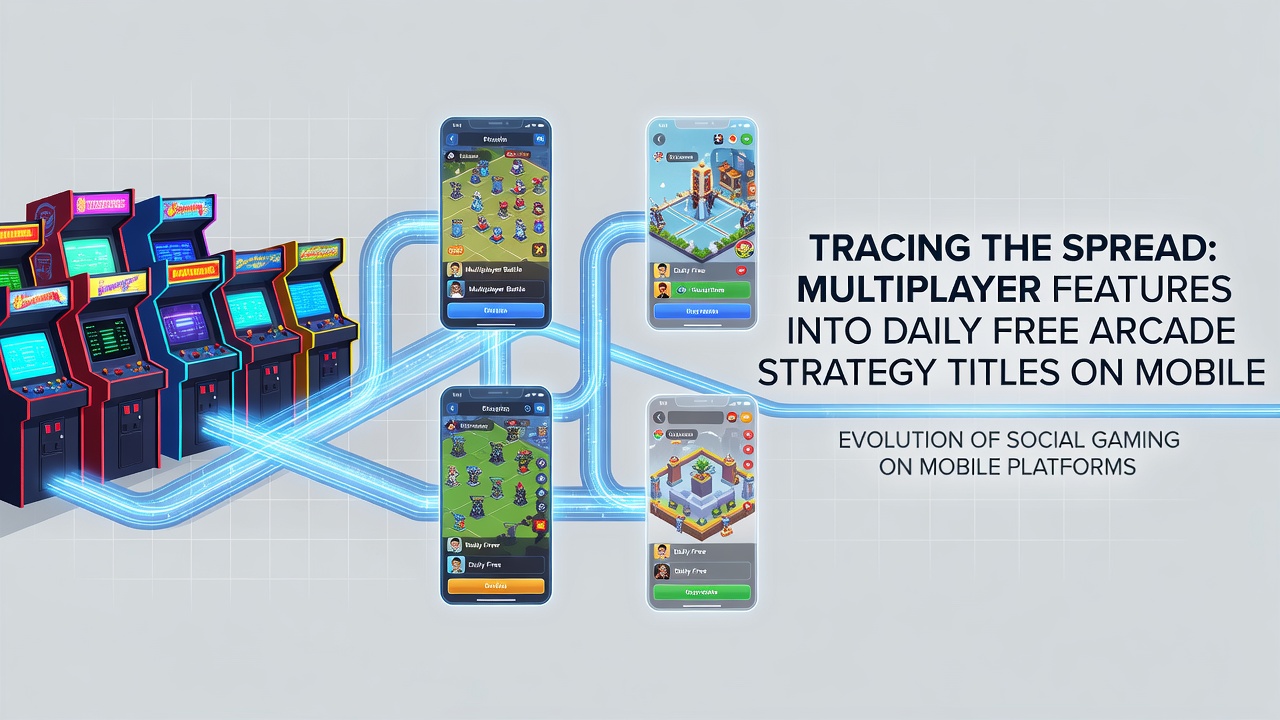
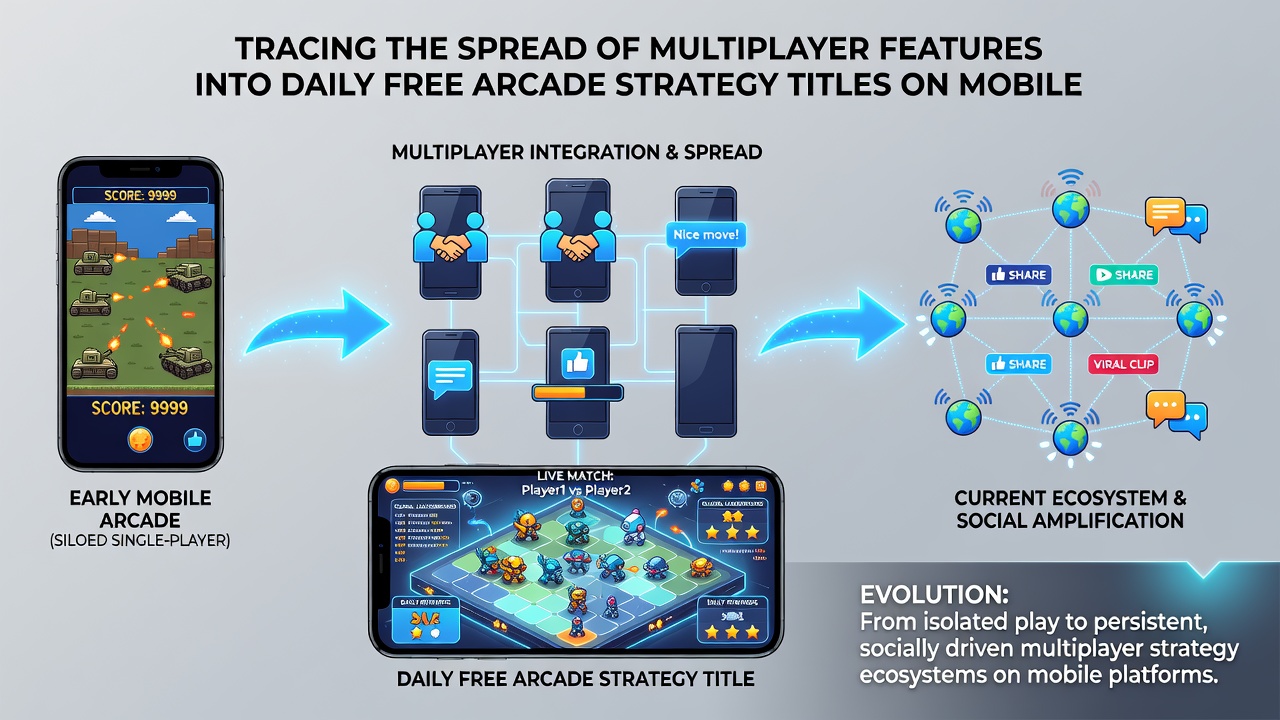
Free arcade strategy titles on mobile devices have incorporated multiplayer components at an accelerating rate since the mid-2010s, and data from industry tracking services indicate that by July 2026 over 68 percent of top-downloaded daily strategy games included at least one persistent social layer. Developers began by grafting simple asynchronous leaderboards onto single-player loops, yet those additions quickly evolved into real-time co-op raids, guild systems, and cross-platform match-making that users encounter during routine play sessions.
Early Integration Patterns
Initial experiments appeared in titles that already featured short arcade-style rounds, where studios added friend-based score sharing to extend engagement without altering core mechanics. Research compiled by the Entertainment Software Association reveals that between 2017 and 2020 the share of free strategy apps containing social features rose from 22 percent to 47 percent, driven largely by the technical maturation of mobile push notifications and cloud save systems. Those early additions remained optional, allowing solo players to ignore them while still completing daily objectives.
Technical and Design Shifts
Engine updates from Unity and Unreal made real-time synchronization lighter on battery and data usage, which removed a major barrier for developers targeting emerging markets. As a result, studios began embedding cooperative defense modes that activate automatically once a player reaches a certain progression threshold. Observers note that these modes often reuse existing level geometry but layer in enemy waves scaled to the number of participants, keeping download sizes manageable while increasing session length by an average of 14 minutes according to telemetry shared at the 2025 Game Developers Conference.
Regional Adoption Trends
Markets in Southeast Asia and Latin America showed the fastest uptake, where daily free titles frequently tie multiplayer events to regional holidays and local sports calendars. Figures released by the Asia Pacific Games Industry Association indicate that event participation rates in those regions reached 81 percent of monthly active users by mid-2026, compared with 59 percent in North American cohorts. European developers, meanwhile, leaned toward asynchronous alliance management systems that comply with stricter data privacy rules, creating hybrid models that blend offline strategy planning with occasional live coordination.
Daily Play Cycle Transformations
Many free arcade strategy games now structure their progression around repeating daily windows that reward group participation. A player might log in to claim solo resource bonuses in the morning, then receive an alert for a limited-time alliance defense that opens three hours later. This rhythm has altered how developers schedule content drops, with most major updates timed to coincide with peak multiplayer concurrency rather than individual time zones. Studies from the University of Melbourne's Digital Games Research Centre found that retention curves flatten significantly when at least one daily mission requires coordinated action, because users return to maintain standing within their groups.
Monetization and Accessibility Balance
Publishers have adjusted revenue models to accommodate larger player pools without creating pay-to-win friction. Cosmetic leaderboards, shared base skins, and temporary power-ups that benefit entire parties have become common, while core competitive balance remains intact. Reports from the Canadian Interactive Digital Entertainment Association highlight that games employing these approaches recorded a 31 percent higher conversion rate to optional battle passes compared with titles that kept multiplayer strictly behind paywalls. Accessibility features such as auto-matchmaking for lower-skill brackets and voice-to-text chat have also expanded, broadening the demographic that can join daily events without prior coordination.
Platform and Cross-Play Developments
Operating system changes introduced in 2024 and 2025 further eased cross-device play, allowing users on older smartphones to join sessions hosted on newer hardware without noticeable lag. Cloud-streaming options now appear in several flagship titles, letting participants contribute to strategy decisions even when their local device lacks processing power for full 3D rendering. These technical bridges have reduced fragmentation, and current telemetry suggests that mixed-device parties now represent 44 percent of all multiplayer matches in the free strategy category.
Conclusion
The movement of multiplayer features into daily free arcade strategy titles on mobile has followed a clear trajectory from optional social overlays to integral scheduling and progression systems. Industry data through July 2026 show sustained growth in participation metrics alongside continued refinement of technical and design approaches that keep these features accessible across regions and device generations. As synchronization tools and privacy frameworks evolve, the patterns established in these games continue to influence how developers structure daily engagement loops across the broader mobile strategy space.