10 Jul 2026
Strategy Mechanics: From Arcade Beginnings to Free Puzzle Experiences on Modern Platforms

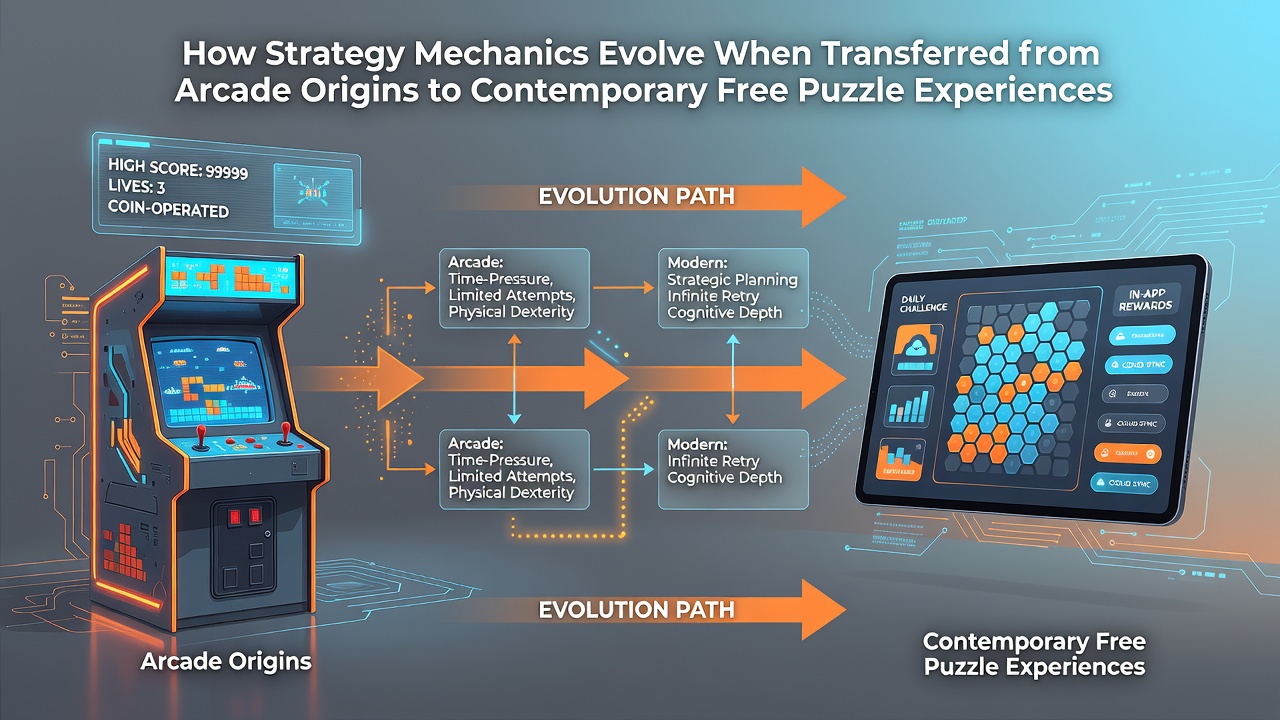
Arcade games established core strategy mechanics through limited hardware constraints and coin-operated timers that rewarded precise resource management alongside pattern recognition. Titles from the late 1970s and 1980s introduced positioning systems where players balanced offensive and defensive choices within short play sessions, and those foundations carried forward as developers adapted similar logic to browser and mobile environments decades later.
Early examples relied on hardware joysticks and buttons to execute layered decisions such as timing attacks while conserving limited ammunition or lives, and contemporary free puzzle applications replicate those tensions through swipe gestures and energy systems that cap daily attempts. Observers note how the shift removes physical coin slots yet preserves scarcity mechanics that encourage repeated engagement across sessions.
Core Mechanics Inherited from Arcade Design
Positioning and prediction formed primary pillars in arcade strategy, where players learned enemy movement cycles and planned sequences several steps ahead, while free puzzle experiences on phones and tablets retain these elements through grid-based layouts that demand foresight about chain reactions. Data from industry tracking shows matching and clearing systems in mobile titles often mirror the spatial awareness required in earlier coin-op releases, although input methods changed from directional pads to touch surfaces.
Timing windows created tension in arcade cabinets because failure ended the session immediately, and modern implementations translate that pressure into move limits or countdown clocks that appear in many free puzzle downloads. Researchers at academic institutions have documented how these constraints maintain decision density even when sessions stretch across multiple devices during a single day.
Adaptation to Touch Interfaces and Cross-Device Play
Touch controls introduced new variables such as drag precision and multi-finger combinations that replaced button mashing, yet strategy layers around sequencing and prioritization remained intact. Developers adjusted visual feedback and hit detection algorithms to accommodate varying screen sizes, which allowed the same underlying decision trees to function consistently whether users played on tablets or smartphones.
Cloud saving and account systems enabled progress continuity across platforms, so a player could begin a session on a desktop browser and continue on a portable device without resetting strategic state. Reports from the Entertainment Software Association indicate that cross-platform features increased average session length by measurable margins in puzzle genres during 2025 and into July 2026, reflecting sustained interest in mechanics that originated in stationary arcade machines.
Monetization and Accessibility Influences on Strategy Depth
Free-to-play models replaced direct coin insertion with optional purchases that affect resource regeneration rates, and this economic layer added new strategic considerations around spending versus patient accumulation. Game designers balanced these options so core progression remained achievable without purchases, preserving the skill-based elements that defined earlier arcade titles.
Regional data from sources including the Australian Classification Board and Canadian regulatory summaries reveal that puzzle applications maintain high download volumes partly because they deliver familiar decision frameworks without requiring hardware purchases beyond the device itself. Accessibility adjustments such as adjustable difficulty sliders and hint systems further extended reach while keeping strategic cores unchanged.
Future Trajectories in Multi-Platform Puzzle Strategy
Emerging hardware including foldable screens and improved cloud streaming continues to test how strategy mechanics scale without altering fundamental rules of resource allocation and pattern prediction. Developers experiment with asynchronous multiplayer modes that let participants contribute moves over extended periods, echoing cooperative elements once found in certain arcade installations yet distributed across separate devices.
Studies published by university research groups continue to examine retention metrics tied to these evolved systems, confirming that mechanics refined in physical arcade settings retain relevance when implemented through contemporary distribution channels.
Conclusion
Strategy mechanics originating in arcade environments have transferred effectively into free puzzle formats by maintaining emphasis on foresight, resource limits, and spatial reasoning while accommodating new input methods and distribution models. Cross-device continuity and adjusted pacing represent practical evolutions rather than wholesale replacements, and available figures indicate ongoing engagement with these adapted systems across global user bases as of mid-2026.