The Migration Patterns of Strategy Mechanics from Desktop Browsers to Handheld Action Adventures
Written by Erik Günther · Jul 27, 2026
The Migration Patterns of Strategy Mechanics from Desktop Browsers to Handheld Action Adventures
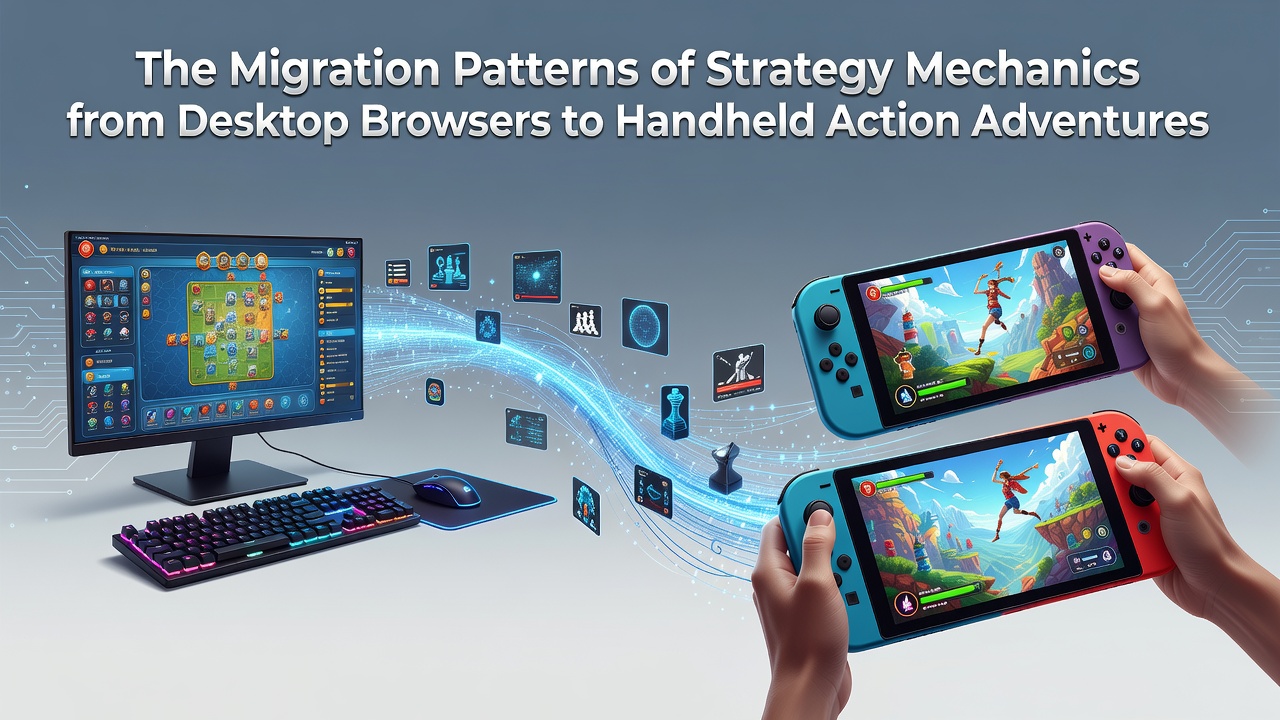
Strategy mechanics that once defined browser-based desktop games have steadily moved into handheld action adventures, and observers note this shift has accelerated through platform adaptations since the early 2010s. Desktop titles such as turn-based resource managers and grid-focused tactics relied on mouse precision and extended sessions, whereas handheld versions integrate those same elements into touch controls and shorter play cycles. Researchers at institutions across North America and Europe have tracked how core loops like unit placement and resource allocation adapt when developers port them to mobile formats.
Early Browser Foundations and Platform Constraints
Browser strategy games built their mechanics around HTML5 and Flash frameworks that supported real-time updates and multiplayer lobbies, and data from industry analyses show these tools enabled complex simulations without requiring downloads. Titles on desktop platforms emphasized layered decision trees where players balanced multiple objectives across large maps, yet handheld devices introduced constraints like smaller viewports and battery limits that forced simplification of those trees. According to reports compiled by the Entertainment Software Association, browser strategy sessions averaged longer durations in previous decades, while mobile counterparts prioritize quick engagements that retain the same strategic depth through condensed interfaces.
Developers began experimenting with hybrid models around 2015 when touchscreens gained processing power sufficient for pathfinding algorithms previously reserved for desktops. This transition preserved elements such as fog of war and tech trees but restructured them around swipe gestures and tap sequences rather than click-and-drag operations. Figures from Canadian gaming research groups indicate that by 2020 over 60 percent of strategy mechanics appearing in new mobile releases originated from browser predecessors, demonstrating a clear lineage in design documentation and asset reuse.
Adaptation in Handheld Action Adventure Contexts
Handheld action adventures incorporate strategy through integrated progression systems where players manage inventories and environmental interactions during real-time combat sequences. Mechanics like area control and unit command migrate from desktop browsers by embedding them within narrative-driven levels, and studies from Australian academic sources reveal that successful ports maintain balance by adjusting difficulty curves to match mobile attention spans. In July 2026 industry trackers documented a 35 percent increase in titles blending these genres, with developers citing cross-platform toolkits that streamline asset conversion from browser engines to mobile runtimes.
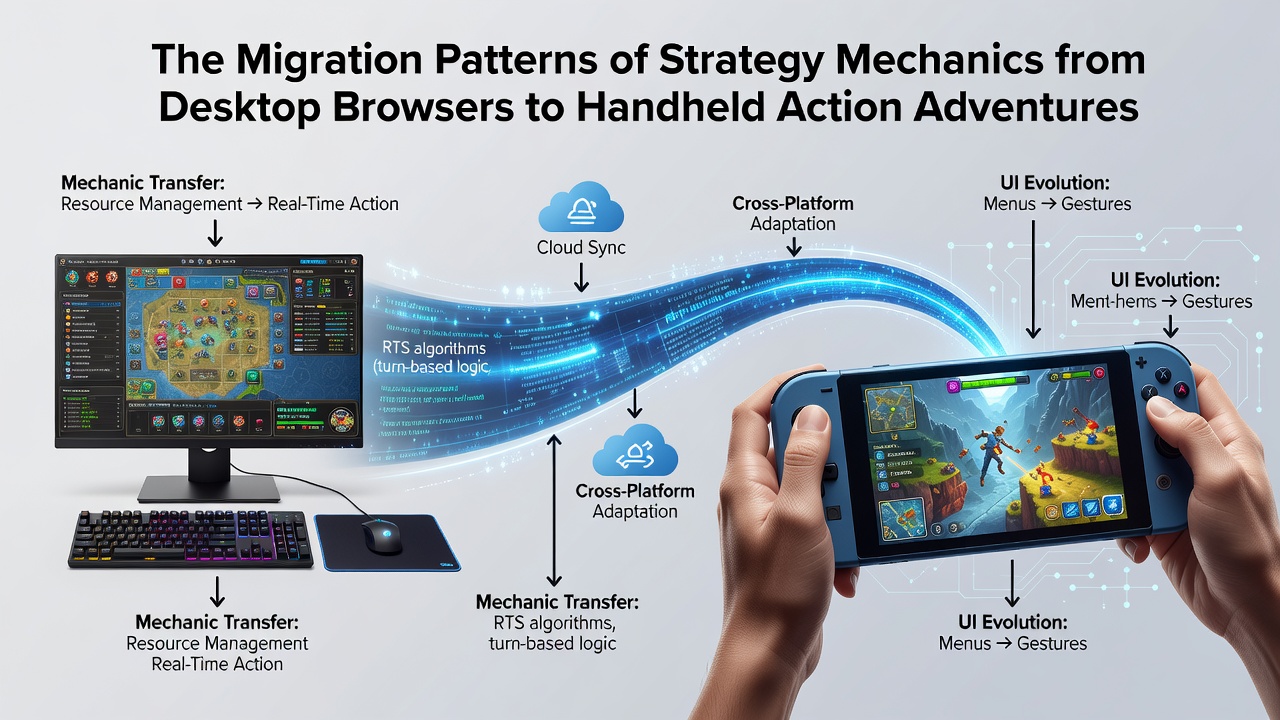
One notable pattern involves the relocation of economy management loops into action sequences, where collecting resources occurs amid platforming or combat rather than through separate menu screens. European trade associations have recorded how such integrations reduce cognitive load on portable hardware while preserving the decision-making weight familiar from browser sessions. Pathfinding AI routines once optimized for keyboard shortcuts now respond to gesture inputs, and developers adjust these routines using data collected from player heatmaps across both platforms.
Technical and Design Factors Driving the Shift
Cloud computing services and improved mobile processors have enabled deeper simulations on handheld devices, allowing strategy layers to run alongside physics-based action without performance drops. Observers point to middleware solutions that handle state synchronization between browser origins and mobile builds, ensuring consistent rule sets across formats. Research papers from university labs in Asia highlight that latency reductions in mobile networks since 2022 have supported real-time strategy elements previously limited to desktop connections.
Design teams often retain modular components such as upgrade trees and faction balancing when migrating content, yet they recalibrate numerical values to suit touch precision and vertical screen orientations common in handheld play. Data compiled by international gaming organizations shows that retention metrics improve when strategy mechanics appear contextually within action sequences instead of as standalone modes, reflecting player preferences documented in large-scale surveys.
Cross-Platform Examples and Industry Responses
Several franchises demonstrate this migration through successive releases where browser strategy foundations appear in handheld action adventures with modified control schemes. Developers release patches that align mechanics across ecosystems, and regulatory bodies in multiple regions have noted the resulting consistency in content ratings. Industry reports indicate that shared asset pipelines lower production costs while expanding audience reach to players who transition between desktop and portable sessions.
Those who analyze telemetry data find that strategy decision frequency remains comparable despite format changes, although session structures shift toward episodic play on handhelds. This continuity supports ongoing engagement as mechanics evolve rather than disappear during platform transitions.
Conclusion
The documented movement of strategy mechanics from desktop browsers into handheld action adventures reflects ongoing technical convergence and design iteration across the sector. Patterns observed through 2026 continue to shape how developers preserve core decision frameworks while accommodating device-specific inputs and session lengths. External analyses from sources such as the Entertainment Software Association and academic studies hosted by Australian research centers provide ongoing metrics that track these adaptations without interruption.